Compare the body, a compatible lens and the things you need to carry, charge and record a photograph.
Five identified camera references
As an Amazon Associate I earn from qualifying purchases. Check the exact model, edition and package. These are researched references, without hands-on ratings or live offers.
The system filter shows named bodies and lenses only. Accessories need their own exact-model checks.
5 product references
No references match these filters. Clear a category, system or search term to see more.
Camera bodies
Nikon Z50 II with wide-angle zoom lens · USA modelAmazon product photo unavailable. Check the exact model at the seller.
Nikon Z50 II with wide-angle zoom lens · USA model
Camera kit
This ASIN names a wide-angle zoom kit, separate from the two-lens kit. Confirm the exact included lens and package before ordering.
Canon EOS R50 · Black · Body onlyAmazon product photo unavailable. Check the exact model at the seller.
Canon EOS R50 · Black · Body only
Canon RF body
An APS-C RF-mount body to compare with the Nikon and Sony systems. The selected package is body only; check the exact supported lens and memory-card requirements.
Panasonic LUMIX G95 · DC-G95MK · 12–60 mm kitAmazon product photo unavailable. Check the exact model at the seller.
Panasonic LUMIX G95 · DC-G95MK · 12–60 mm kit
Micro Four Thirds kit
The G95 kit with the 12–60 mm lens, not the G95D or G97. A Micro Four Thirds system reference for the Panasonic lenses already listed; check the exact kit contents.
Write down where you will work, how close you can stand and whether the subject moves. A small kitchen, a walk and a field with distant subjects ask different things of the lens and the person carrying the camera. Start with your current photographs or the first-camera checklist, rather than turning a sensor format into a universal ranking.
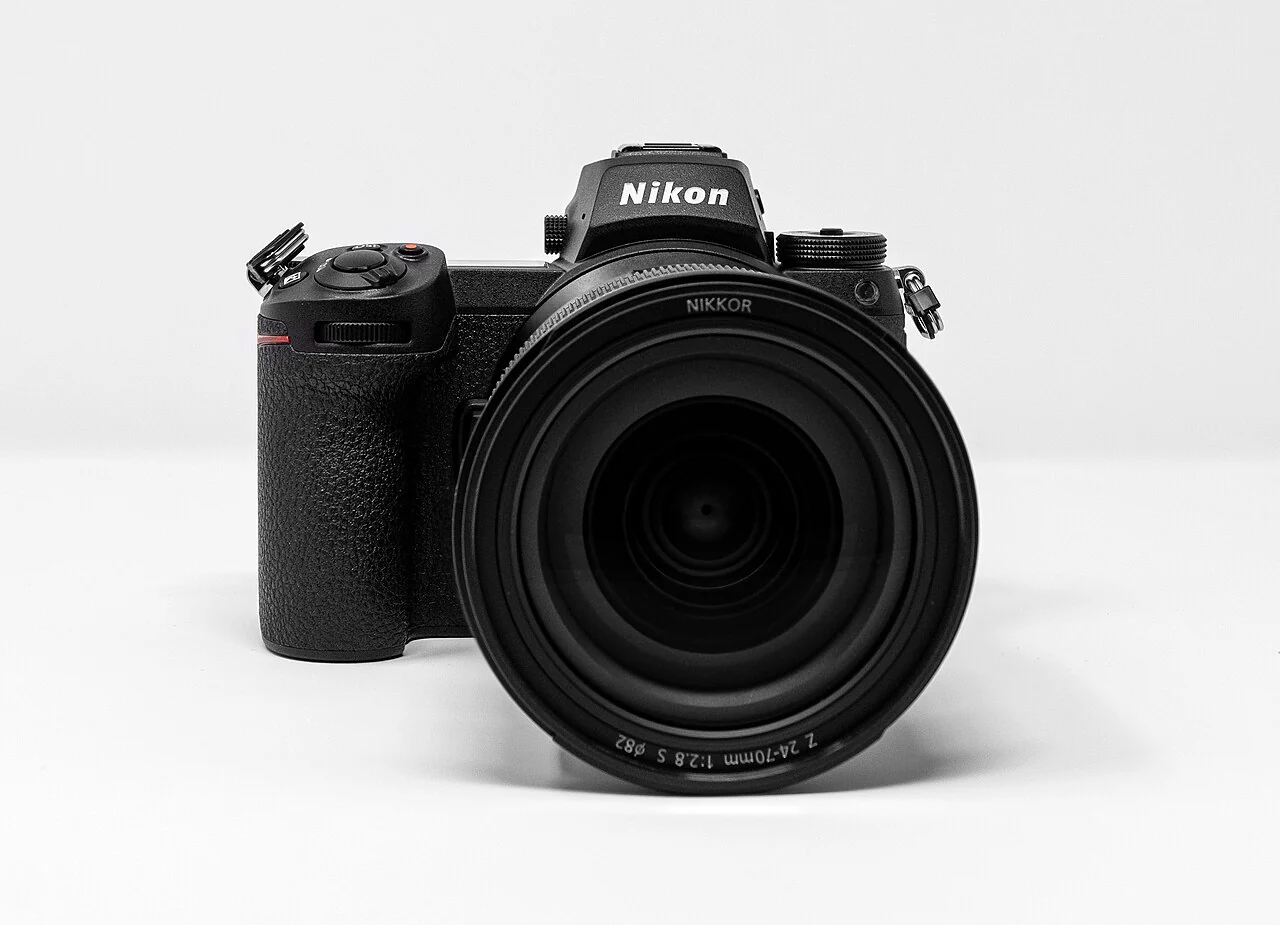
Identify the body and lens separately. This Nikon Z7 II and 24–70 mm lens is a visual reference, not a tested or recommended first kit.Photo: Wilfredor · Wikimedia Commons · CC0 · Resized.
Compare complete packages
The photographed Nikon Z7 II and 24–70 mm lens above are an editorial reference; they are not any of the selected catalog packages. In the cards, a body-only listing and a kit listing are deliberately named differently. Check the included lens, battery, charging arrangements and recording media before comparing the total purchase. Do not assume an accessory shown in a seller’s secondary photograph is part of the package.
Follow the exact lens system
The existing catalog contains Nikon Z DX references, a Canon RF APS-C body, a full-frame Sony E reference and a Micro Four Thirds kit. Their lenses do not become interchangeable because two bodies have a similar sensor size. Start with the full model name and the manufacturer’s compatibility information. Our mount, coverage and functions checklist keeps those questions separate.
Handle the work, not just the specification sheet
If you can borrow or handle the camera, try changing a setting while holding it comfortably, finding a focus point and reaching the playback controls. Check how you will see the image in the light where you plan to work. Make a sample file and confirm that you can open, back up and share it with your current equipment. These are checks for your intended use, rather than evidence of a product’s measured autofocus or image quality.
Keep a first kit deliberate
Leave yourself time to learn one lens and one repeatable outing. The RAW-versus-JPEG comparison helps you plan the work after capture; the lens guide helps you rehearse the frame before adding another lens. Manufacturer sources are linked on the product cards where the catalog records them. Verify exact package details at the seller before buying.